The short answer is that the EcoFlow DELTA Pro Ultra X installation cost is not a single fixed number, and EcoFlow says so directly on its own product page.
For most United States homeowners in 2026, you should plan on roughly $3,000 to $5,000 for professional installation labor plus permit fees when you pair the system with the Smart Home Panel 3 or the Smart Gateway (200A).
That figure sits on top of the hardware, which starts at $7,999 for the base bundle.
EcoFlow states that installation fees are calculated from your installation ZIP code and shown at checkout, so the only accurate quote is the one you generate for your own address.
Quick Verdict
The battery system itself needs no electrician.
The DELTA Pro Ultra X ships with standard outlets, including one NEMA 14-50, one NEMA L14-30 and two NEMA 5-20, so you can plug loads straight into it on day one.
The installation cost appears only when you want automatic whole home backup, because that requires an EcoFlow smart panel or gateway wired into your electrical service.
That is licensed electrician work, it usually needs a permit, and it is where the money goes.
If you skip the panel entirely, your installation cost is zero.
What Actually Gets Installed
It helps to separate the two halves of the system before looking at any price.
- The DELTA Pro Ultra X inverter and batteries. These are plug and play, stack together, and require no wiring work.
- The Smart Home Panel 3 or Smart Gateway (200A). These replace or attach to your main electrical panel and must be installed by a qualified electrician.
Almost every dollar of labor, permitting and inspection cost is attached to that second half.
EcoFlow notes on the Smart Home Panel 3 product page that the panel requires installation before use and that the specific fee depends on an assessment.
EcoFlow DELTA Pro Ultra X Installation Cost: The Real Line Items
EcoFlow sells the labor as a separate product called the Turnkey Installation Service.
You buy it alongside the hardware, EcoFlow matches you with an authorized installer, and the installer handles the site visit, wiring and commissioning.
Here is how the money breaks down, with prices checked on the official EcoFlow United States store on 23 August 2026.
| Cost item | Typical amount | Who charges it |
|---|---|---|
| DELTA Pro Ultra X inverter + 2 batteries (12kW / 12kWh) | $7,999 | EcoFlow |
| Smart Home Panel 3 (32 circuits) | $3,099 alone | EcoFlow |
| Smart Gateway (200A), cheaper alternative | $1,999 alone | EcoFlow |
| Turnkey installation labor | Quoted by ZIP code at checkout | EcoFlow |
| Permit application service | $500 charged on the official site | EcoFlow |
| Breakers, disconnects, extra materials | Varies | Your electrician |
Bundling is usually cheaper than buying the panel separately.
The bundle with the Smart Home Panel 3 was listed at $10,999, which is about $900 less than buying the base kit and the panel on their own.
The version with the Smart Gateway (200A) was listed at $9,899.
Availability, bundle contents and discounts change often, so treat every figure here as a planning number rather than a quote.
Check the Current EcoFlow Price
What the Standard Installation Fee Covers
This is the part buyers most often get wrong, so read EcoFlow’s official installation terms and conditions before you order.
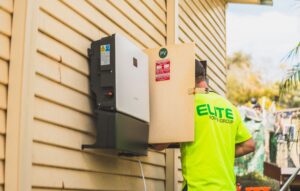
According to those terms, the standard installation service fee covers only standard installation labor for one smart panel or gateway unit.
Covered work includes replacing your existing load center with the panel, or fitting it as a subpanel located within two feet of the existing panel.
EcoFlow also states that removal of your old subpanel is included at no extra charge.
What Is Not Covered
- Circuit breakers and other overcurrent protection devices.
- Outdoor disconnects, emergency power off switches, junction boxes and meter box work.
- Permit application fees and any stamped engineering drawings.
- Extra labor if the panel sits more than two feet from your existing panel.
- Structural work, wall openings, patching or painting.
- Travel charges outside the electrician’s standard service area.
- Installing a second inverter, panel or gateway unit.
Those items are paid directly to the electrician based on the quote you receive.
This is why two homeowners in the same city can pay very different totals.
Permits and Inspections
EcoFlow charges a $500 permit application fee on its website when you select the permit option.
If the actual municipal permit costs more than $500, you pay the difference directly to the electrician.
If it costs less, the difference is not automatically refunded, so ask before you buy.
There is also an onsite assessment fee of up to $500 that may be charged if you cancel after the electrician has visited, according to the EcoFlow installation refund policy.
That fee is generally waived when you proceed and the site passes inspection conditions.
EcoFlow’s advertised seven day installation timeline starts from permit issuance, not from the day you place the order.
Three Realistic Total Cost Scenarios
These examples assume the base 12kWh system and EcoFlow’s turnkey service in a serviced ZIP code.
They are illustrative planning figures built from published prices, not quotes.
Planning ranges for a 12kWh DELTA Pro Ultra X system
1. No panel, plug in only
Hardware only, no electrician, no permit, no automatic switchover.
2. Smart Gateway (200A), 6 controlled circuits
Hardware plus labor plus permit, essential circuits automated.
3. Smart Home Panel 3, 32 circuits
Full panel replacement, circuit level control, highest labor and permit exposure.
A home needing a service upgrade, long conduit runs or a relocated panel can land above these ranges.
A simple garage panel swap in a low cost permitting jurisdiction can land below them.
The Tax Credit Change Most Articles Still Get Wrong
This is the single biggest cost change since the DELTA Pro Ultra X launched.
The federal Residential Clean Energy Credit under Section 25D, which previously returned 30 percent of qualifying battery and installation costs, no longer applies to property placed in service after 31 December 2025.
The IRS confirms this on its official credit page.
In practical terms, a 2026 installation that would once have earned roughly $4,000 back now earns nothing federally through that route.
Any article or dealer listing that still advertises “eligible for the 30 percent tax credit” for a new 2026 purchase is out of date.
State credits, utility rebates and some third party ownership arrangements may still apply, so check your state energy office before you assume the incentive is gone entirely.
Four Ways to Lower the Installation Cost
- Use the free Live Installation Support option. EcoFlow lists remote video guidance for the Smart Home Panel 3 and Smart Gateway at $0, so your own licensed electrician can do the work with EcoFlow watching.
- Choose the Smart Gateway (200A) instead of the Smart Home Panel 3. It is $1,100 cheaper in hardware and involves less panel work, though it controls only six circuits instead of 32.
- Keep the panel within two feet of the existing load center. Anything further triggers extra labor charges under EcoFlow’s own terms.
- Get one independent electrician quote. A local contractor may beat EcoFlow’s turnkey price, especially in areas with competitive electrical labor rates.
The tradeoff with your own electrician is that EcoFlow’s five guarantees and single point of accountability no longer apply.
What Pushes the Price Up
- An older panel or service that must be upgraded to 200A.
- Aluminum branch wiring or deteriorated wiring, which EcoFlow will not install over.
- A meter and main combination panel that complicates the tie in.
- Long cable runs, since the smart inlet box can sit up to 30 metres from the panel but the conductors cost money.
- Heavy conductors, since EcoFlow’s installation guide recommends a 200A two pole breaker with minimum 3/0 AWG copper or 250 kcmil aluminium.
- Jurisdictions requiring stamped engineering drawings for energy storage systems.
- A second inverter, which needs its own installation package or a separate quote.
A Warning About Rooftop Solar
Many buyers assume the 10kW solar input means they can wire rooftop panels straight into the system and save on a separate solar project.
EcoFlow’s own product page carries a notice that rooftop solar charging for the DELTA Pro Ultra X through the Smart Home Panel 3 or Gateway requires current transformers.
Beyond that, roof mounted arrays bring separate code requirements around rapid shutdown, arc fault protection and wiring methods that a portable solar setup does not.
Treat rooftop solar as its own project with its own permit, its own inspection and its own budget.
Ask a licensed solar contractor in your state to confirm what is permittable before you buy hardware on the assumption it will work.
Questions to Ask Before You Pay
- What is the installation price for my exact ZIP code, shown at checkout?
- Does my quote include breakers, or are those billed separately?
- Will the panel replace my main panel or sit as a subpanel?
- What is the local permit fee, and will it exceed the $500 EcoFlow charges?
- Does my service need upgrading before this can be installed?
- Who returns for the inspection if the first attempt fails?
- What happens to my installation fee if the site assessment finds a problem?
Get every answer in writing before the electrician arrives.
Who Should Buy It
- Homeowners in storm prone regions who want automatic whole home backup without a fuel generator.
- Households with medical equipment, well pumps or home offices where an outage has a real cost.
- Buyers who want a battery system they can physically take with them if they move.
- People who value a single vendor handling hardware, labor and permitting.
Who Should Avoid It
- Renters and anyone who cannot modify the electrical panel.
- Buyers who only need a fridge, lights and internet through a short outage, since a DELTA Pro 3 or similar unit costs a fraction as much.
- Anyone counting on the expired 30 percent federal credit to make the numbers work.
- Homeowners planning rooftop solar as the primary charging source without a contractor confirming it is permittable.
- Buyers in ZIP codes EcoFlow does not service, where coordination becomes your problem.
Final Recommendation
The honest way to think about the EcoFlow DELTA Pro Ultra X installation cost is as a second purchase roughly one third to one half the size of the hardware purchase.
Budget $3,000 to $5,000 for labor and permits on a standard smart panel installation, then confirm the real number by entering your ZIP code on EcoFlow’s site.
If that total pushes you past your comfort level, the Smart Gateway (200A) path saves meaningful money without giving up automatic switchover.
And if you mainly want a large, movable battery for outages, buying the base bundle with no panel at all is a legitimate choice that costs nothing to install.
Compare EcoFlow Configurations

Frequently Asked Questions
Do I need an electrician for the DELTA Pro Ultra X itself?
No, the inverter and batteries are plug and play and work standalone with under 10ms switchover for anything plugged directly into them.
Can I install the Smart Home Panel 3 myself?
This is main panel work involving 200A conductors and live service connections, so it should be done by a licensed electrician and will almost certainly need a permit and inspection.
Why does EcoFlow not publish one installation price?
EcoFlow states that installation fees are calculated from your installation ZIP code, because labor rates, permit costs and code requirements vary widely across the United States.
Is the permit fee refundable if the permit is denied?
EcoFlow’s terms state that permit application fees and related charges are not refundable regardless of whether the permit is approved, denied, delayed or withdrawn.
Does one installation package cover a second inverter?
No, each package covers one smart panel or gateway unit, and additional units require another package or a separate quote from the electrician.
What happens if I return the system after installation?
You remain responsible for the non refundable installation fee and the full cost of removing the installed panel or gateway, which EcoFlow does not cover.
Is there any way to get free installation support?
EcoFlow lists a Live Installation Support option at $0, which provides real time video guidance while your own electrician performs the work, though all labor and materials remain your cost.