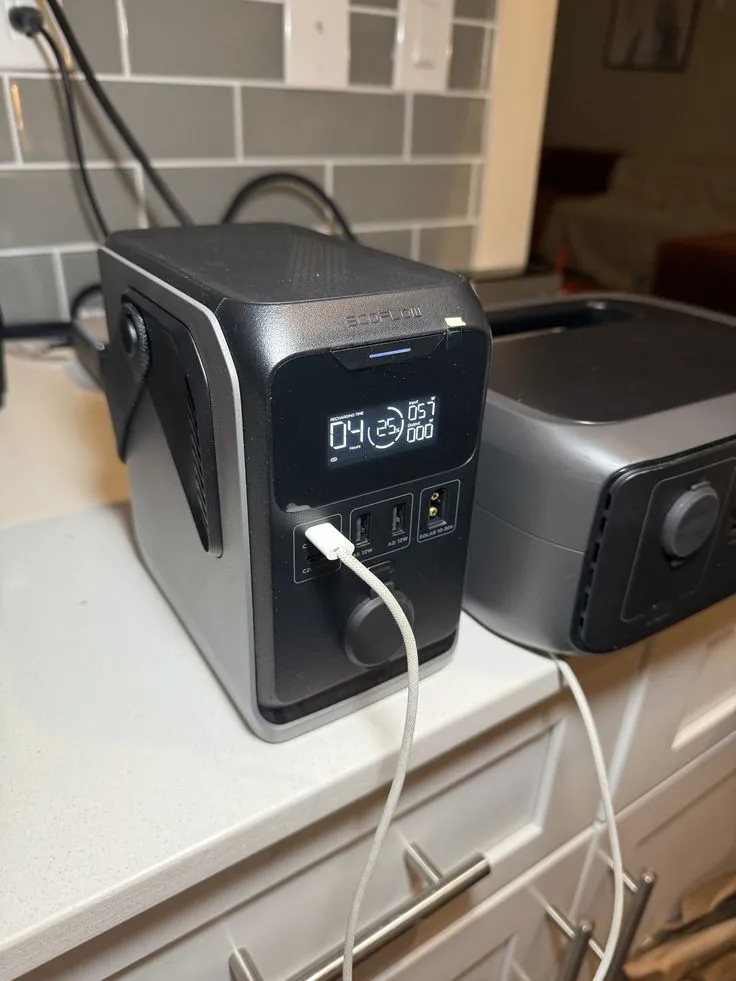
The short answer in the EcoFlow DELTA Pro Ultra X vs DELTA Pro Ultra comparison is that the Ultra X is the newer and much larger system, delivering 12kW from one inverter instead of 7.2kW.
Choose the DELTA Pro Ultra X if you want a large home backup system with heavy 240V loads and room to grow past 30kWh.
Choose the DELTA Pro Ultra if you want a lower entry price, a 30A RV style socket, USB and DC outputs, or a system that is easier to move.
Both units can power appliances directly from their own outlets, so this is a question of scale and connection type rather than one being a battery and the other being an appliance.
All prices below were checked on the official EcoFlow US store on August 24, 2026.
Prices, discounts, bundles, and stock change frequently, so confirm the current cart price before ordering.
Quick verdict: EcoFlow DELTA Pro Ultra X vs DELTA Pro Ultra
The DELTA Pro Ultra X is built primarily for larger home integration, but it also runs as an independent unit through its own AC outlets.
The DELTA Pro Ultra is the smaller and cheaper starting point, and it keeps the connections that portable and RV users care about.
The Ultra X is heavier in its standard two battery form, though it remains modular and can be relocated with effort.
| Specification | DELTA Pro Ultra X | DELTA Pro Ultra |
|---|---|---|
| Standard bundle | 1 inverter and 2 batteries | 1 inverter and 1 battery |
| Standard capacity | 12.288kWh | 6144Wh |
| Continuous AC output | 12kW, 120/240V | 7200W, 120/240V |
| Published surge | Not listed on spec sheet | 10.8kW |
| Max with one inverter | 61.44kWh, 10 batteries | 30kWh, 5 batteries |
| Max system | 184.32kWh, 36kW, 3 inverters | 90kWh, 21.6kW, 3 inverters |
| Solar input per inverter | 10kW total, 2 ports | 5600W total, 2 ports |
| Max AC output socket | 240V 50A | 240V 30A |
| Warranty | 5 years | 5 years |
Important configuration note.
The 12kW rating applies to the standard arrangement of two batteries connected across both powered battery ports on the DELTA Pro Ultra X.
EcoFlow recommends connecting the same number of battery packs to each of the two ports.
An unbalanced arrangement may prevent the inverter from reaching its full 12kW output.
Capacity and output figures come from the official DELTA Pro Ultra X specifications and the official DELTA Pro Ultra product page.

Outlets, RV use, and portability
Both inverters have usable AC outlets on the front, so both can run appliances without any panel wiring.
The difference is which plugs you get.
| Connection | DELTA Pro Ultra X | DELTA Pro Ultra |
|---|---|---|
| NEMA 5-20, 120V 20A | 2 | 4 |
| TT-30, 120V 30A RV style | None | 1 |
| NEMA L14-30, 120/240V | 1 at 30A | 1 at 30A |
| NEMA 14-50, 120/240V 50A | 1 | None |
| USB and DC outputs | None | USB-A, USB-C, 12.6V DC |
If you own a 30A travel trailer, the DELTA Pro Ultra is the more convenient unit because its 120V 30A RV style socket matches the standard trailer cord.
If you own a 50A RV, the NEMA 14-50 outlet on the DELTA Pro Ultra X can suit that connection when the cable, wiring, and equipment are appropriate for the load.
Do not assume an adapter solves the difference between them.
Confirm the voltage, plug type, wiring, and appliance ratings for your specific rig before connecting anything, and ask a qualified electrician if you are unsure.
Portability is also relative here.
The DELTA Pro Ultra X inverter weighs about 76 pounds and each battery weighs about 111 pounds, so a standard two battery system is a two person move at best.
The DELTA Pro Ultra starts with one battery, has an optional trolley, and adds USB and DC outputs, which makes it the more practical choice for camping, job sites, and vehicles.
Price and total system cost
The DELTA Pro Ultra X costs more to start, but it also ships with twice the battery and nearly double the output.
| Configuration | Capacity | Listed price when checked |
|---|---|---|
| DELTA Pro Ultra, 1 inverter and 1 battery | 6.144kWh | $4,199, regular price $5,799 |
| DELTA Pro Ultra, 1 inverter and 2 batteries | 12.288kWh | $5,999 |
| DELTA Pro Ultra with Smart Home Panel 2 | 6.144kWh | $5,599 |
| DELTA Pro Ultra X, 1 inverter and 2 batteries | 12.288kWh | $7,999 |
| DELTA Pro Ultra X with Smart Gateway 200A | 12.288kWh | $9,899 |
| DELTA Pro Ultra X with Smart Home Panel 3 | 12.288kWh | $10,999 |
| DELTA Pro Ultra X, 1 inverter and 4 batteries with Smart Home Panel 3 | 24.576kWh | $13,999 |
Availability matters as much as price on these listings.
Several official bundle cards on both product pages displayed a sold out label during this review, and the DELTA Pro Ultra page also showed a pre order notice on the checkout panel.
Treat the figures above as the official listed prices when checked rather than a guarantee that you can buy that exact configuration today.
Integration hardware was listed separately at $1,499 for the Smart Home Panel 2, $1,999 for the Smart Gateway 200A, and $3,099 for the Smart Home Panel 3.
None of these numbers include installation labor, permits, inspection, or a possible service upgrade, and those costs vary heavily by state and by house.
Our separate breakdown of DELTA Pro Ultra X labor and permit costs walks through those line items before you request a quote.
Check current DELTA Pro Ultra X prices and bundles
Expansion batteries and the price discrepancy
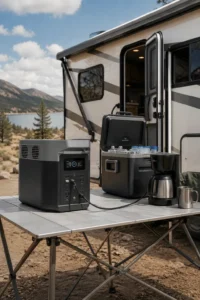
EcoFlow currently describes the EcoFlow DELTA Pro Ultra Series Smart Extra Battery as compatible with both the DELTA Pro Ultra and DELTA Pro Ultra X inverters.
Each pack holds 6144Wh.
The complication is that official EcoFlow pages do not agree on the price.
The accessory module on both product pages listed the series battery at $2,299, while the dedicated extra battery listing showed $2,399 against a standard price of $3,299 when checked.
Because the same compatible battery appears at different prices on different official pages, it is not safe to claim that either platform has a cheaper expansion path.
Confirm the exact part number and the price shown in your cart before ordering additional packs.
Same stored energy, but about $3,500 more buys 67 percent more continuous output and control of far more circuits, with installation extra in both cases.
Capacity and realistic runtime
Rated capacity is not the energy that reaches your appliances.
Inverter conversion and standby losses take a share, so plan on roughly 85 to 90 percent of the rated figure arriving as usable AC energy.
- DELTA Pro Ultra base system: 6.144kWh rated, roughly 5.2 to 5.5kWh usable
- DELTA Pro Ultra X standard system: 12.288kWh rated, roughly 10.4 to 11.1kWh usable
Here is a transparent essentials example using the formula appliance watts multiplied by operating hours equals required energy.
| Load | Calculation | Daily energy |
|---|---|---|
| Refrigerator | 150W for 10 running hours | 1.5kWh |
| Chest freezer | 100W for 14 running hours | 1.4kWh |
| Well pump | 800W for 0.75 hours | 0.6kWh |
| Lights, router, phones, laptop | 100W for 10 hours | 1.0kWh |
| Total | 4.5kWh per day |
On that estimated essentials profile the DELTA Pro Ultra base system covers a little over one day, and the DELTA Pro Ultra X standard system covers roughly two and a half days.
Air conditioning changes the picture completely.
A 3-ton central unit drawing about 3.5kW and running roughly four hours of compressor time across a hot afternoon uses about 14kWh, calculated as 3.5kW multiplied by 4 hours.
That single load exceeds the entire usable capacity of a standard DELTA Pro Ultra X system.
This is why output and capacity are separate decisions, since a larger inverter starts heavier equipment but does not make it run longer.
Every runtime figure here is an estimate, and real results depend on your appliances, insulation, weather, wiring, battery condition, and how many loads run at once.
Home integration is the expensive decision
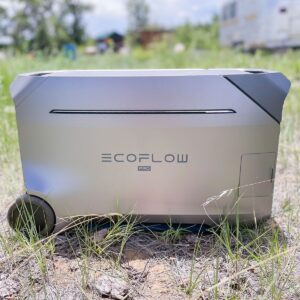
Each generation connects to your house through different hardware, and this is the part that is costly to change later.
| Integration option | Works with | Smart circuits | Listed price |
|---|---|---|---|
| Smart Home Panel 2 | DELTA Pro Ultra | Up to 12 | $1,499 |
| Smart Gateway 200A | DELTA Pro Ultra X | 6 controlled | $1,999 |
| Smart Home Panel 3 | DELTA Pro Ultra X | Up to 32 | $3,099 |
The Smart Home Panel 2 is a sub panel supporting up to 12 circuits, so you choose which circuits stay powered and everything else goes dark.
The Smart Home Panel 3 supports control of up to 32 circuits with a 200A rating, which is why EcoFlow markets the Ultra X as a home wide system.
The Smart Gateway 200A is the cheaper option, providing whole panel transfer with smart control of six circuits for load shedding.
Neither accessory automatically fits every house.
Suitability depends on your service size, circuit count, actual loads, local code, and an installer assessment, so treat a quote and a site survey as a required step rather than a formality.
EcoFlow also states that the 32 smart circuits feature requires the Smart Home Panel 3 and is not supported by the DELTA Pro Ultra X on its own.
Solar and charging differences
The DELTA Pro Ultra X accepts up to 10kW of solar through two ports rated 80V to 500V at 15A, with 5000W maximum on each port.
There is a practical catch that most comparisons skip.
The Ultra X has no low voltage PV input, so panels must be wired in series to reach the 80V starting threshold.
The DELTA Pro Ultra keeps a low voltage port accepting 30V to 150V alongside a high voltage input of 80V to 450V, for 5600W total.
That low voltage port is genuinely useful if you plan to lean a few portable panels against the garage rather than build a rooftop array.
EcoFlow ties its fast recharge claim to solar rather than to grid charging, stating that the 10kW solar input can bring 12kWh to 80 percent in around one hour.
Do not apply that figure to AC charging.
The Ultra X does accept up to 12kW of AC input, but only at 120/240V on a 50A connection, and the standard supplied charging cable is a 120V 15A cord rated near 1800W.
Reaching the maximum AC input rate therefore requires a suitable 50A circuit, the correct cable, and a professional connection.
The DELTA Pro Ultra charges far more slowly from a normal wall outlet, with its higher published speeds depending on the number of batteries and the connection method.
Rooftop solar charging for the Ultra X through the Smart Home Panel 3 or Smart Gateway also requires current transformers, which are sensors that measure electrical current so the system can monitor power flow.
Advantages and disadvantages
These are the trade offs that actually change a purchase decision.
DELTA Pro Ultra X strengths
- 12kW continuous output from one inverter and up to 36kW with three
- 10kW solar input and a 12kW AC input ceiling
- Ten batteries per inverter and a 184.32kWh system ceiling
- Control of up to 32 circuits with the Smart Home Panel 3
DELTA Pro Ultra X drawbacks
- Higher entry price and heavier standard configuration
- No TT-30, USB, or DC outputs
- No low voltage solar input for casual portable panels
- No published surge rating on the official spec sheet
DELTA Pro Ultra strengths
- Lower entry price and a smaller starting configuration
- TT-30 RV style socket plus USB and DC outputs
- Online UPS mode with 0ms switchover, meaning connected equipment receives continuous conditioned power with no transfer interruption
- Certified to both UL 1973 and UL 9540
DELTA Pro Ultra drawbacks
- 7.2kW output limits simultaneous heavy loads
- Five batteries per inverter and a 90kWh system ceiling
- Slower AC recharging between outages
- Smart Home Panel 2 supports fewer circuits
On surge behaviour, EcoFlow markets an Adaptive Start algorithm on the Ultra X that it describes as handling startup surges up to 45kW, while some retail listings quote 36kW instead.
Ask your installer to check your air conditioner’s Locked Rotor Amps, which is the brief starting current a motor or compressor draws, against EcoFlow’s compatibility documentation rather than trusting a headline figure.

Who each system suits
Who should buy the DELTA Pro Ultra X
- You want a large share of the house backed up rather than a handful of circuits.
- You need to start a central air conditioner, well pump, or electric range.
- You are planning rooftop solar above 5.6kW.
- You expect to grow past 30kWh of storage.
- You are already budgeting for an electrician and permits.
Who should buy the DELTA Pro Ultra
- Essential circuits, not the whole house, is your real goal.
- Your hardware budget tops out near $5,000 to $7,500.
- You want a 30A RV connection, USB, and DC outputs.
- You want the system to move between a house, a workshop, and a trailer.
- You value the 0ms online UPS mode for sensitive electronics.
Who should avoid both
- Anyone who only needs a few hours of fridge and phone runtime.
- Anyone expecting days of air conditioning without significant solar or a generator.
- Renters who cannot modify the electrical panel.
- Anyone planning to do panel wiring without a licensed electrician.
Any work involving permanent wiring, your electrical panel, rooftop solar, or high voltage equipment belongs to a qualified professional.
Final recommendation
In the EcoFlow DELTA Pro Ultra X vs DELTA Pro Ultra decision, the newer system is not simply an upgrade you buy for its own sake.
It solves a bigger problem at a bigger price.
Choose the DELTA Pro Ultra X when you need high continuous output, large solar input, broad circuit coverage, or expansion well beyond 30kWh.
Choose the DELTA Pro Ultra when you want essential circuit backup at a lower entry price, or when RV and portable connections genuinely matter to you.
Before you decide, price the complete system on both paths, including integration hardware, expansion batteries, permits, and labor, rather than comparing headline prices alone.
Check current DELTA Pro Ultra prices and availability
Frequently asked questions
Are the DELTA Pro Ultra and DELTA Pro Ultra X batteries the same?
EcoFlow describes the EcoFlow DELTA Pro Ultra Series Smart Extra Battery as compatible with both inverters, and both hold 6144Wh.
Official pages currently show different prices for extra batteries, so confirm the part number and cart price with EcoFlow before ordering.
Can I upgrade my DELTA Pro Ultra to a DELTA Pro Ultra X?
There is no conversion path for the inverter, since the Ultra X uses different integration hardware in the form of the Smart Home Panel 3 or Smart Gateway 200A.
Moving between platforms means new integration hardware and another electrician visit.
Does the DELTA Pro Ultra X always deliver 12kW?
The 12kW rating assumes two batteries connected across both powered battery ports.
EcoFlow recommends an equal number of packs on each port, and an unbalanced arrangement may keep the inverter below its full output.
Can either unit power appliances without any installation?
Yes, both inverters have front AC outlets and can run appliances directly.
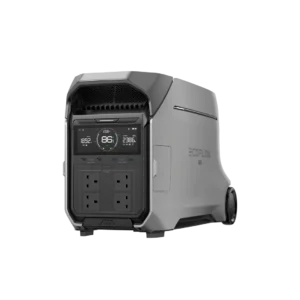
The DELTA Pro Ultra adds a TT-30 RV style socket, USB ports, and a DC output, which makes plug in use easier for camping and vehicles.
Which switches over faster during an outage?
The DELTA Pro Ultra X switches in under 10ms standalone and under 20ms with the Smart Home Panel 3.
The DELTA Pro Ultra offers a backup UPS mode under 20ms plus an online UPS mode with 0ms switchover for sensitive equipment.
Which offers better value per kilowatt hour?
Using the listed prices when checked, the DELTA Pro Ultra X standard bundle works out to roughly $651 per rated kilowatt hour against roughly $683 for the smallest DELTA Pro Ultra bundle.
That DELTA Pro Ultra figure relies on its current discounted price of $4,199, and it would rise to about $944 per kilowatt hour at the regular $5,799 price.